How a Volcano Erupts
A gentle, age‑appropriate encyclopedia story that explains the basic principles of volcanic eruptions for preschool children (ages 3–6). Uses a friendly volcano character and simple analogies to teach about magma, gas pressure, eruptions, and how volcanoes change the land.
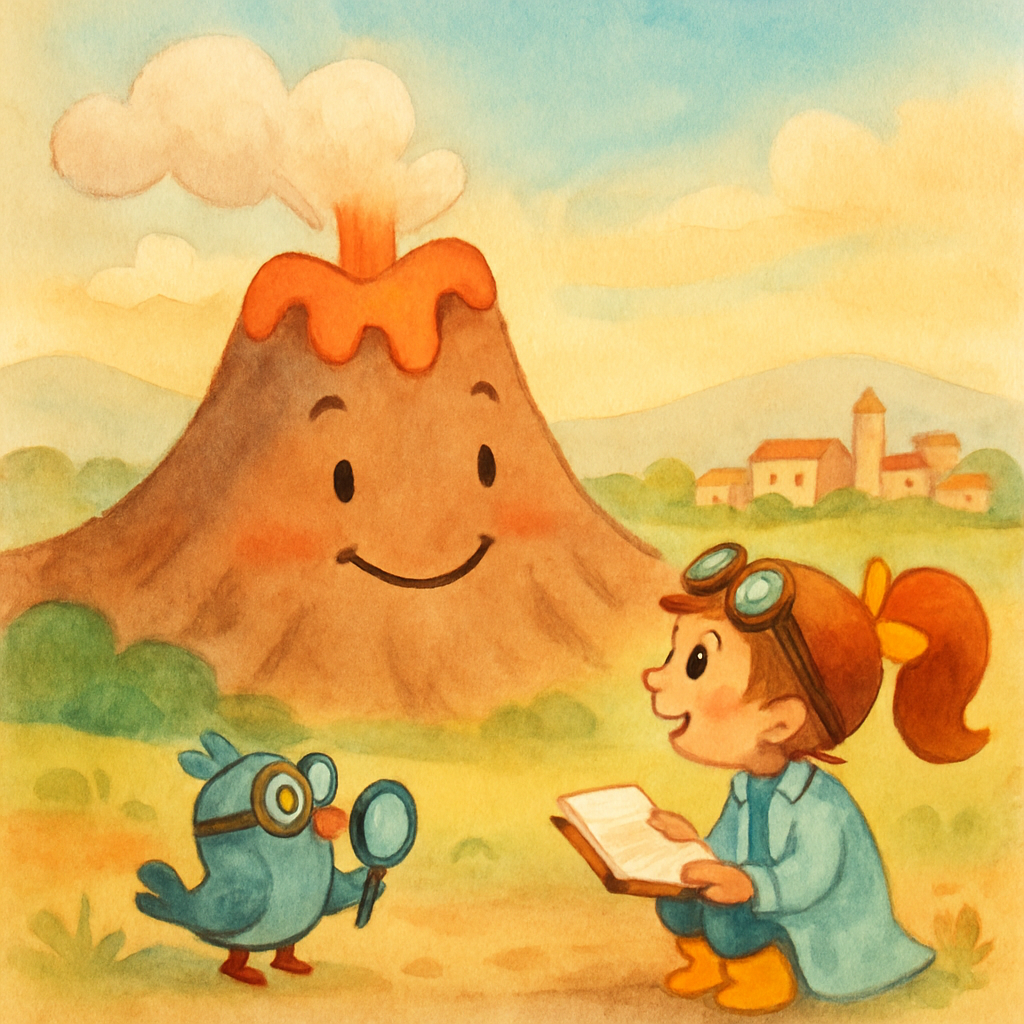
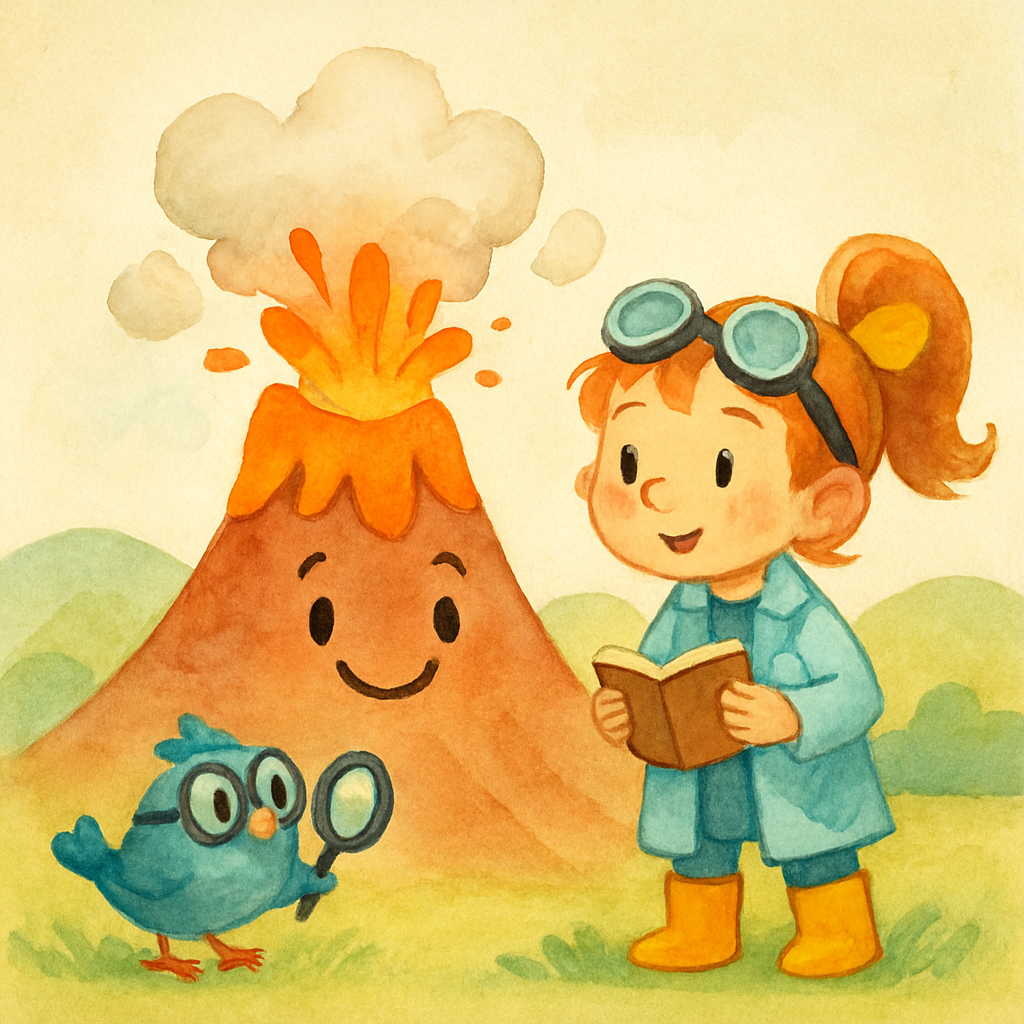
A volcano is a mountain that can push out hot rock, gases, and ash. Meet Pico, a friendly volcano who likes to teach.
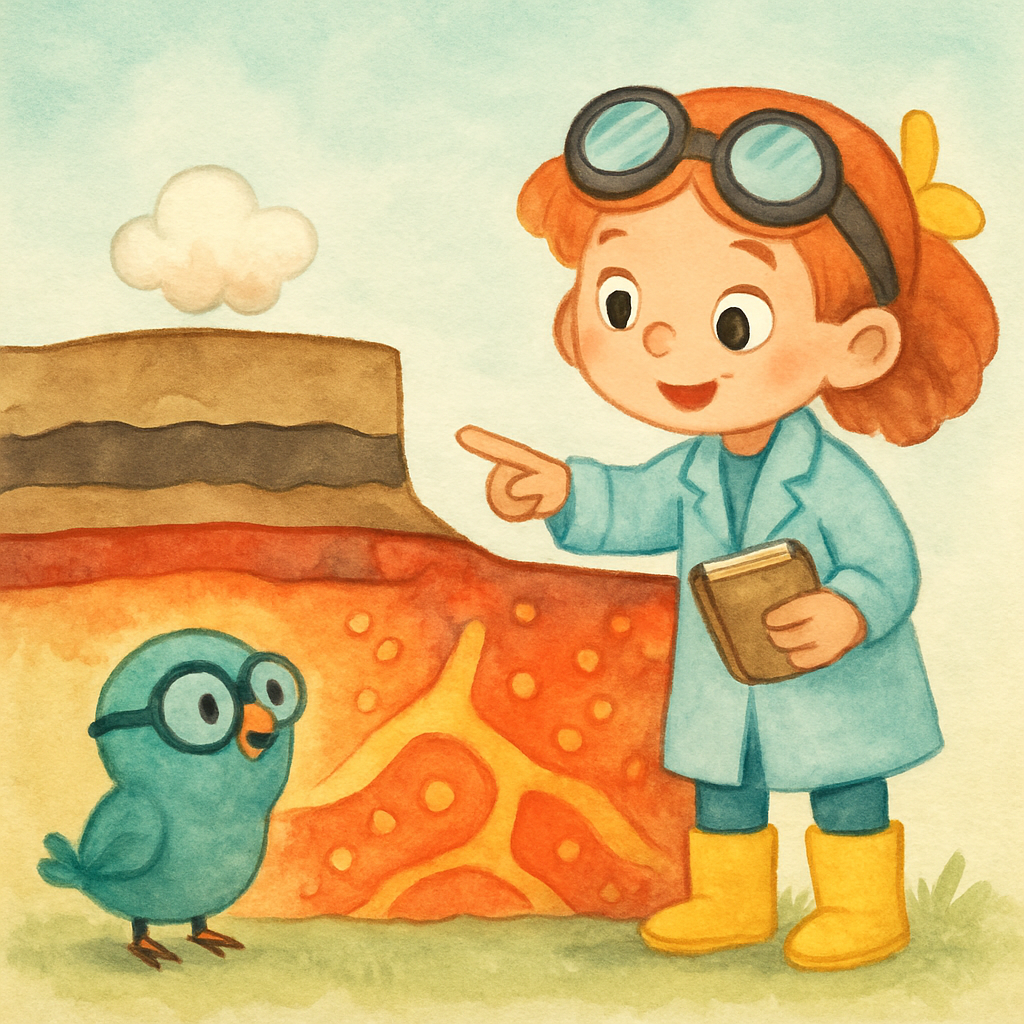
Deep under the ground, rock can melt and become magma. Magma is very hot and flows like thick warm soup.
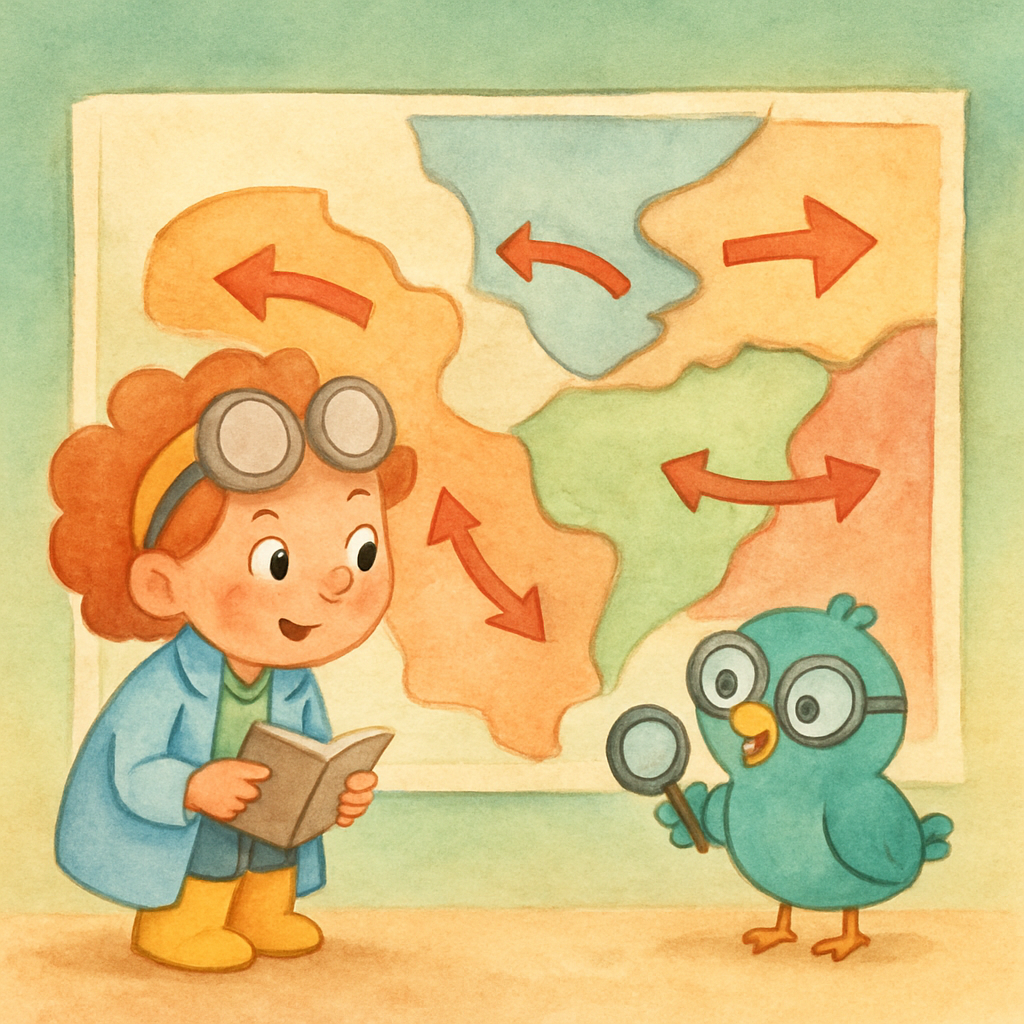
The Earth's crust is made of big plates that move slowly. When plates push or pull, they can make space for magma to move up.
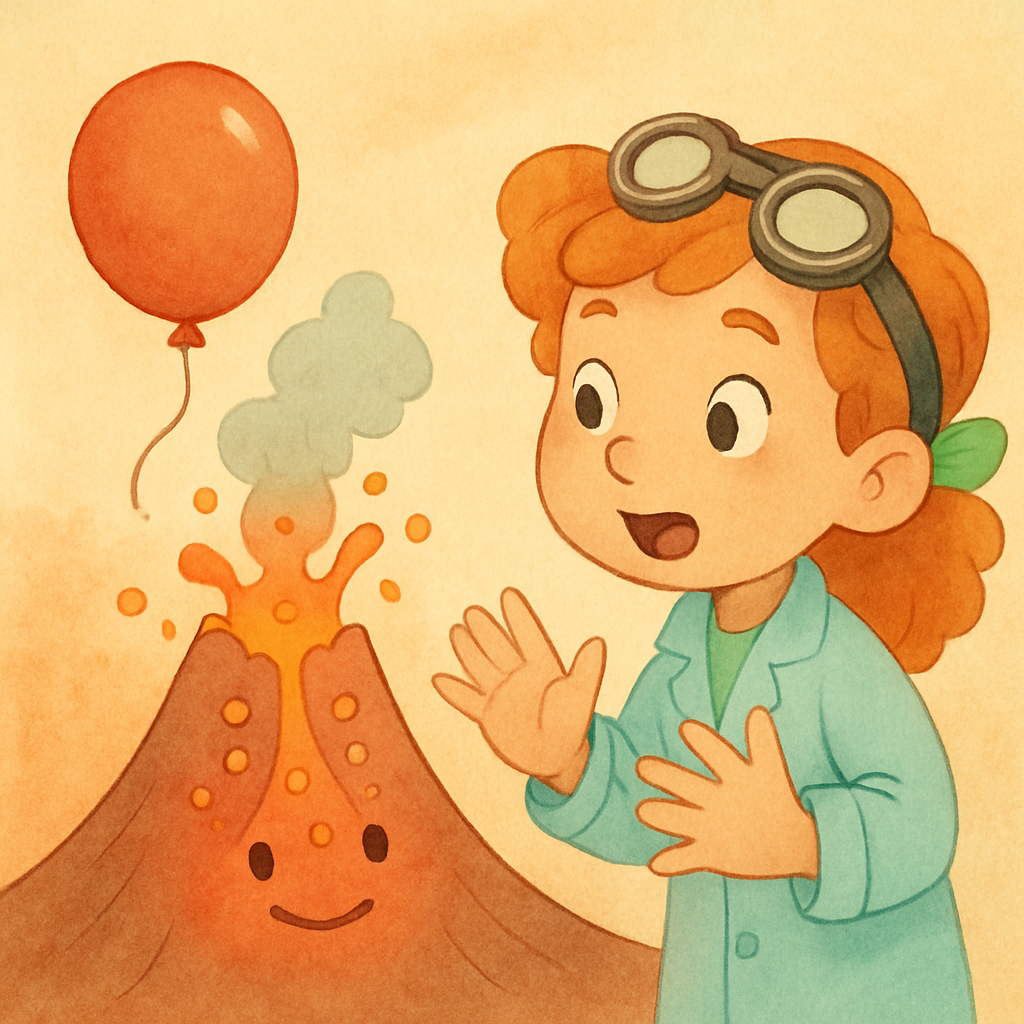
Magma holds gas bubbles inside it. The gas pushes hard like air in a balloon and makes magma rise faster.
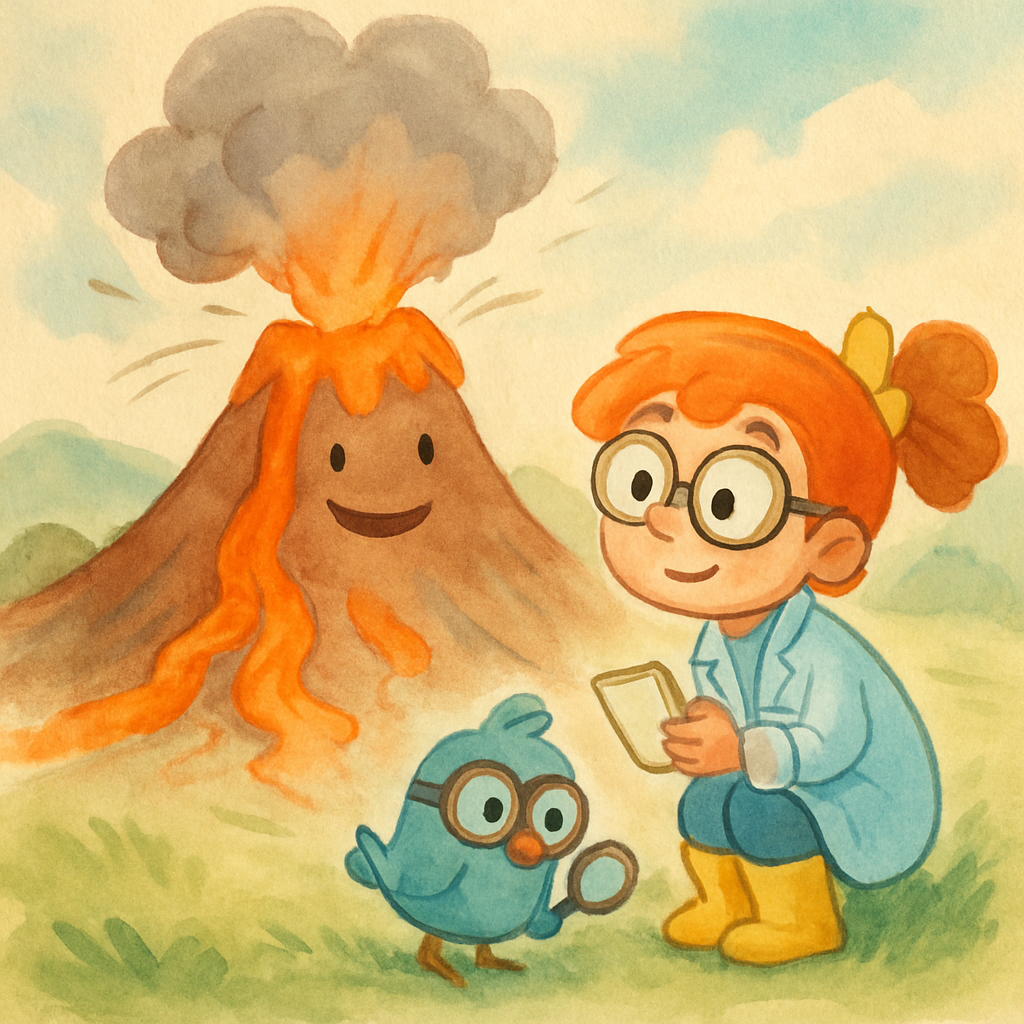
When the magma reaches the top, the volcano can erupt. Lava flows out and ash and gas can shoot up into the sky.
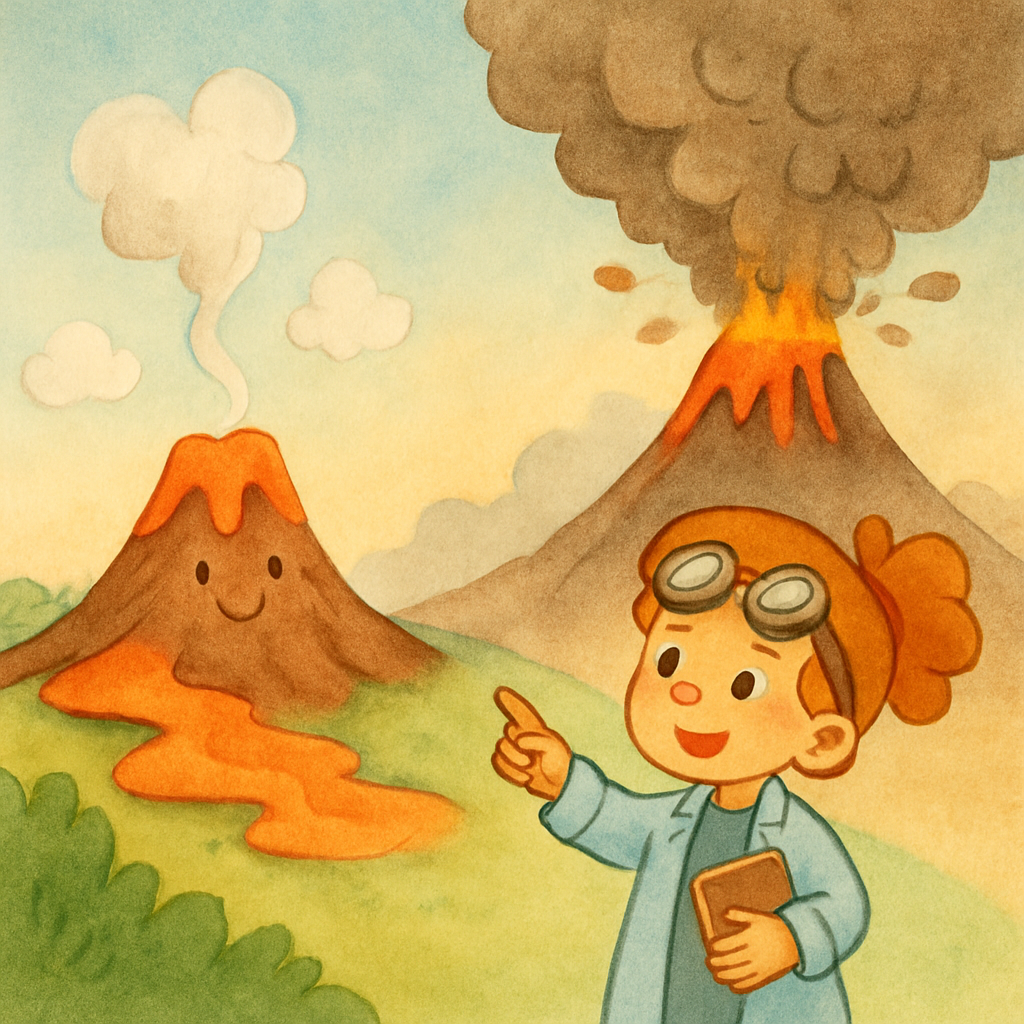
Some eruptions are quiet and lava pours slowly like syrup. Other eruptions are louder and send ash high into the air.
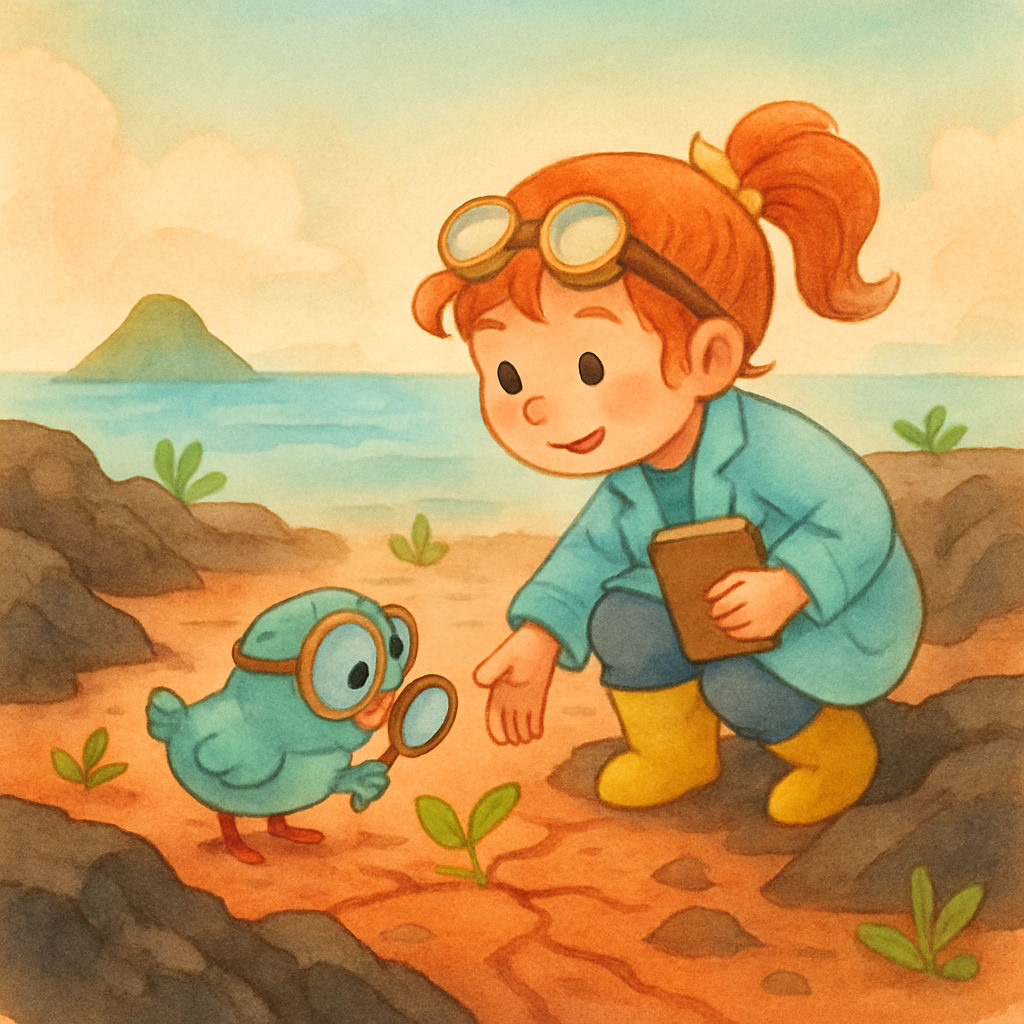
After the eruption, lava cools and becomes new rock. Over many years, volcanoes can help build new land and islands.
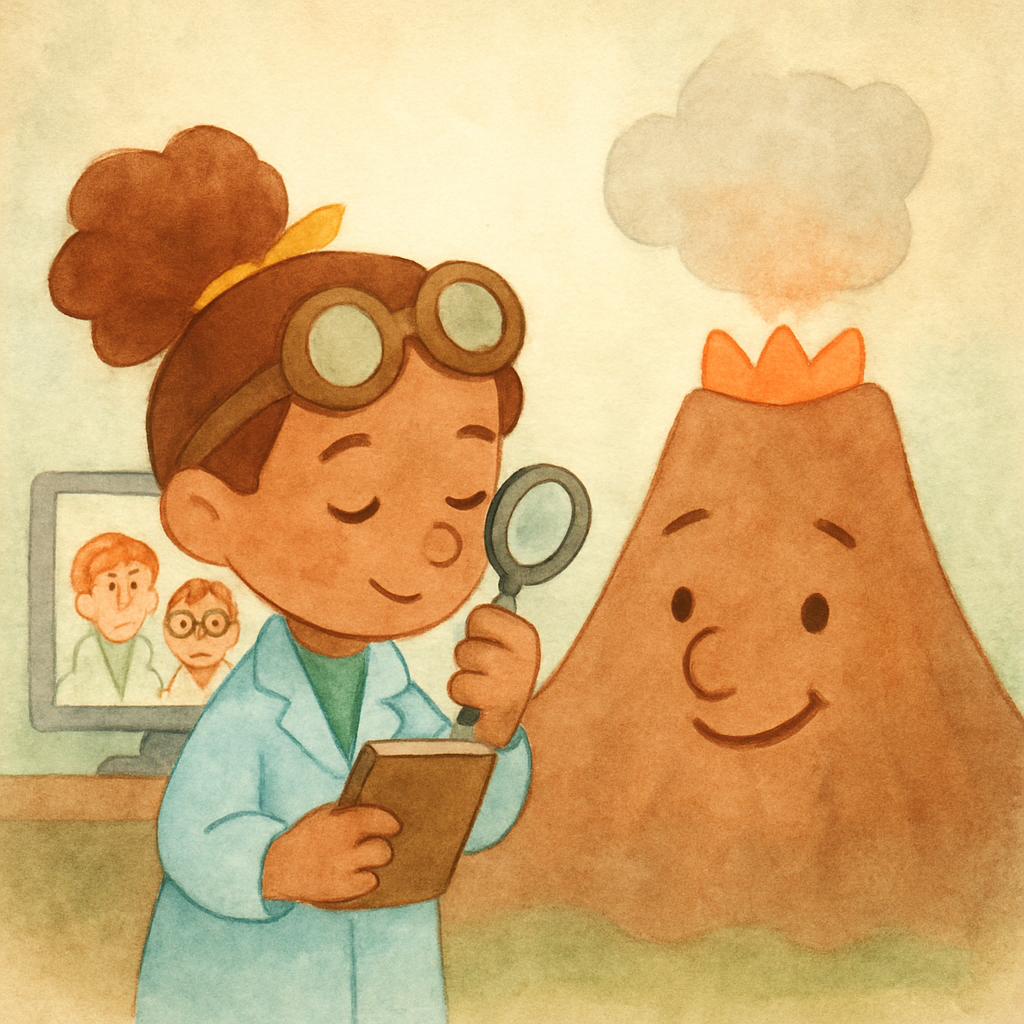
Scientists watch volcanoes to keep people safe. Volcanoes are powerful and help make our planet — they are part of Earth's story.
Read the full story
A volcano is a mountain that can push out hot rock, gases, and ash. Meet Pico, a friendly volcano who likes to teach.
Deep under the ground, rock can melt and become magma. Magma is very hot and flows like thick warm soup.
The Earth's crust is made of big plates that move slowly. When plates push or pull, they can make space for magma to move up.
Magma holds gas bubbles inside it. The gas pushes hard like air in a balloon and makes magma rise faster.
When the magma reaches the top, the volcano can erupt. Lava flows out and ash and gas can shoot up into the sky.
Some eruptions are quiet and lava pours slowly like syrup. Other eruptions are louder and send ash high into the air.
After the eruption, lava cools and becomes new rock. Over many years, volcanoes can help build new land and islands.
Scientists watch volcanoes to keep people safe. Volcanoes are powerful and help make our planet — they are part of Earth's story.